

Safety & Pharmacovigilance
Safety evidence is spread across spontaneous reports, trial safety data, PSMF records, and public sources, each with its own terminology. Linking drugs, adverse events, and regulatory information means rebuilding it by hand.
DISQOVER connects it all into one searchable knowledge layer, so safety teams and their AI systems work with concepts, not source-specific labels.
The data you already have
Integrating pharmacovigilance data means connecting everything relevant to a substance's safety profile in one place a safety or risk management team can query, without replacing the source systems themselves.
You do not need new data to get value from DISQOVER: safety and pharmacovigilance teams already work with a recognizable set of public, proprietary, and licensed sources, and DISQOVER connects them.
How it works
DISQOVER resolves two problems at once: differences in how substances, products, and adverse events are described across systems, and the relationships between safety and regulatory evidence that span domains, adding the traceability a safety decision needs on top.
Example questions
Outcomes
Safety evidence is worth most when it's connected early, and kept connected.
Safety is one of the leading causes of failure across drug development, which makes connecting safety evidence a practical necessity rather than a compliance afterthought. With DISQOVER, the data behind each of these workflows is already linked, so teams can act on the whole evidence base instead of one source at a time.
Today, a reviewer checks each medication on a patient's list against separate label and interaction databases, one of the most time-consuming manual steps in assessing an individual case safety report. With label information and known drug-drug interactions linked to every product, the full list can be cross-referenced at once. The return is less manual checking per case.
DailyMed labels and SmPC content connect to the same canonical products and substances as your case data.
Structured adverse event data, case narratives, trial safety data, and literature are usually reviewed one source at a time. In one connected view, patterns can surface earlier, for example a rare side effect concentrated in one patient subgroup. The return is signal assessment with the whole evidence base in view.
FAERS, your SUSARs and spontaneous reports, trial safety data, and PubMed link to the same substance and adverse event concepts.
An adverse event can look like a signal when it is already common in the patient population. With real-world data in the same knowledge layer as spontaneous reports, the background rate becomes routine context rather than a separate study. The return is fewer false alarms taken forward to full assessment.
Licensed RWD sources, and the HMA-EMA catalogues that describe them, sit alongside your safety data.
Models that estimate which adverse events are more likely in a given population need harmonized input on drugs, adverse events, and patient characteristics. The knowledge graph already connects them. The return is model input your team can trace back to its source.
Provenance travels with the data, whether a model reads it through the API, an export, or MCP.
Known toxicology, pharmacology, and literature evidence for a compound's class or mechanism is spread across sources. Pulled together early, it helps a team anticipate likely findings and shape the safety monitoring plan before the first-in-human study. The return is a monitoring plan informed by evidence, not hindsight.
Early findings link to the same substance concepts you follow through post-marketing surveillance.
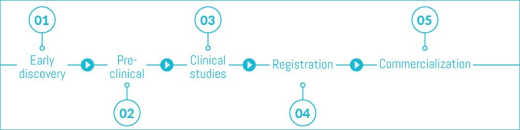
The same connected evidence follows a substance from early toxicology to post-marketing surveillance, so nothing is rebuilt at the next stage.
DISQOVER ships with industry-standard ontologies and domain-specific entity models out of the box, so pharmacovigilance and regulatory concepts are understood from day one. For safety and pharmacovigilance, that includes:
DISQOVER supports natural language search directly in DISQOVER Explore. Through its MCP interface, AI agents and LLM applications can query the same knowledge layer in natural language. Either way, answers are grounded and provenance-backed.
DISQOVER tracks which sources contributed to every data point, so visibility can be restricted by user group without separate access-management tooling, consistent across the UI and the API.
This matters when safety data carries reporting obligations and access restrictions that differ by source and jurisdiction.
FAQ
Pharmacovigilance data integration means connecting adverse event reports, clinical safety data, regulatory reference data, and scientific literature into one searchable layer, so a safety team can see the full picture for a substance without manually cross-referencing separate systems.
DISQOVER's semantic mediation resolves a product's development name, market name, INN, and chemical name to a single concept, so users and AI systems can search by whichever name they know and still find everything connected to it.
Yes. DISQOVER models a product's connections to its clinical trials, sponsors, and facility locations as a knowledge graph, so a user can move from a product directly to every trial that mentions it.
Yes. In a customer implementation, DISQOVER integrated Referentials Management Service (RMS) and Organisations Management Service (OMS) data alongside SPOR and IDMP-Ontology, aligning them to canonical product, substance, and organization concepts.
Talk to us about connecting your adverse event reports, clinical safety data, and regulatory reference data into one searchable knowledge layer.
ONTOFORCE enables life science companies to unlock hidden insights from data.
With DISQOVER, built on knowledge graph technology, we support life sciences and pharmaceutical companies with innovative data management and visualization.